
ZingZee
NVIDIA Just Built the Infrastructure for the Age of AI Agents. Here Is What It Means for Your Business.
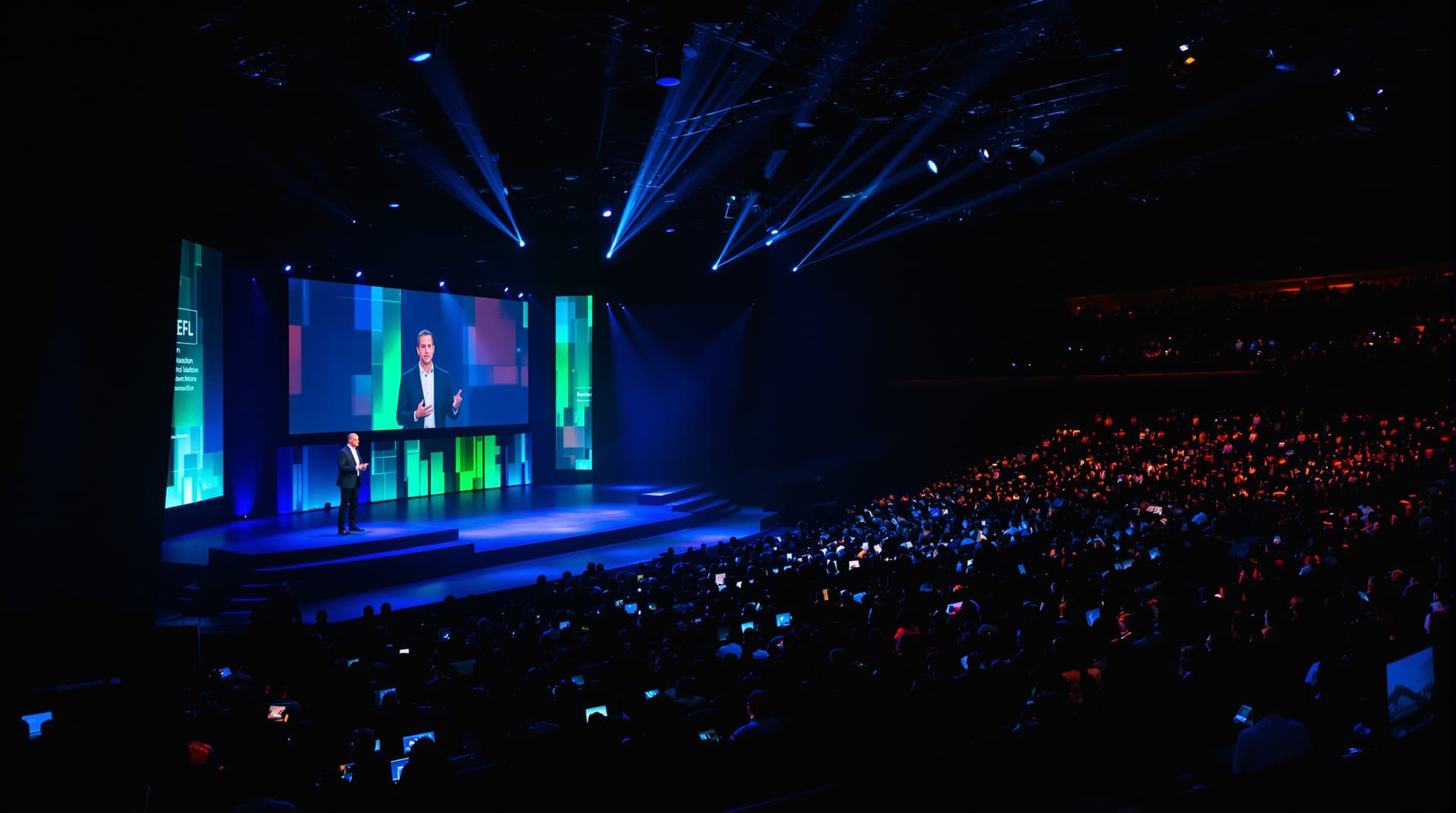
On March 16, Jensen Huang walked onto the stage at the SAP Center in San Jose in his trademark leather jacket and told 25,000 developers, investors, and enterprise buyers something they already suspected: the age of AI agents is not approaching. It has arrived. See also: what agentic AI means for businesses.
At NVIDIA GTC 2026, Huang did not just announce a product. He announced a complete infrastructure stack for the agentic era. Vera Rubin, a new computing platform built from seven new chips and five rack-scale systems, purpose-engineered for AI agents at scale. Alongside it: NemoClaw, the software operating system that sits on top, giving enterprises the framework to build and deploy AI agents that can reason, act, and operate autonomously inside real business environments. See also: difference between AI automation and AI employees.
When the company that makes the chips powering every major AI system on earth decides to build both the hardware and software for enterprise AI agents, that is not a product launch. That is a statement about where every business is heading, and how fast. See also: how long AI deployment takes.
For business owners in Cyprus, this changes the calculus. Not in the way you might think.
What NVIDIA Actually Announced at GTC 2026
Two announcements define GTC 2026 for anyone thinking about AI in business.
First: Vera Rubin. This is NVIDIA's new computing platform for the agentic AI era. Seven new chips. Five rack-scale systems. One supercomputer designed specifically for AI agents. Huang described it as a 40 million times increase in compute compared to ten years ago. The platform includes a new NVIDIA Vera CPU built from the ground up for agentic AI workloads, not gaming, not graphics, not general-purpose computing. Agents.
Second: NemoClaw. This is the software layer, part of NVIDIA AI Enterprise, positioned explicitly as the operating system for enterprise AI agents. It provides the frameworks, APIs, and architecture that allow organisations to build AI that can handle complex multi-step business workflows, integrate with existing systems, and operate without constant human supervision. Think of Vera Rubin as the engine and NemoClaw as the driver's seat.
Together, they represent NVIDIA betting its next decade on agentic AI as the fundamental shift in how the world computes. The company now projects at least $1 trillion in revenue from Blackwell and Vera Rubin deployments through 2027. That number only makes sense if enterprises are planning to deploy these systems at scale, and they are.

Why This Week Is a Market Inflection Signal
GTC 2026 did not happen in isolation. It happened in the same two-week window as the Zendesk acquisition of Forethought and Meta's public announcement of replacing thousands of roles with AI workers. Three of the largest players in enterprise technology all made the same bet in the same week: AI agents are not a future experiment. They are current infrastructure.
Huang's numbers reinforce this. He cited $150 billion in venture capital flowing into AI-native companies in the past year alone. He described computing demand as being "off the charts," with demand having increased by one million times over recent years. These are not numbers attached to a technology wave that is still forming. They are the numbers of a wave that is already breaking.
For Cyprus businesses specifically, the adoption curve is running 18 to 24 months behind the UK and Western Europe. That gap is not a comfort. It is a window that is closing. The businesses in Cyprus that move now will have a structural advantage over competitors that wait for permission from a clearer signal.
The signal does not get clearer than this.
The Open Infrastructure Trap
Here is the part most coverage of NVIDIA's GTC announcements gets wrong. The fact that NemoClaw is part of NVIDIA's enterprise stack and that Vera Rubin will be accessible through cloud providers does not mean AI agent deployment becomes simple. It means the infrastructure becomes accessible. Those are entirely different things.
Running a car requires a road. The road being publicly available does not mean everyone drives well.
NVIDIA builds the chips and the frameworks. What they do not build is the business logic, the workflow integration, the customer journey mapping, the language configuration, the testing, the monitoring, or the ongoing optimisation that turns infrastructure into a functional AI employee. That work lives between what NVIDIA ships and what your business actually needs.
The businesses seeing real results from AI agents are not the ones who downloaded a framework and started experimenting. They are the ones who deployed with precision, connected agents to their actual systems, defined clear operating boundaries, and have professionals managing the performance. The gap between accessible infrastructure and correct deployment is where most implementations fail.
Three Misconceptions Cyprus Businesses Have About AI Agents

GTC 2026 will generate enormous media coverage over the coming weeks. Most of it will focus on the hardware numbers and the revenue projections. Very little will address what the announcement actually means for a hotel in Limassol, a law firm in Nicosia, or a real estate agency in Paphos.
Three misconceptions are worth addressing directly.
The first misconception: this is enterprise-only technology. Vera Rubin and NemoClaw are designed for hyperscale deployments. But the AI employees that Cyprus businesses actually need operate on the application layer above this infrastructure, through platforms that abstract away the complexity. The infrastructure being enterprise-grade makes the application layer more powerful, not less accessible.
The second misconception: this will take years to arrive in Cyprus. The cloud providers partnered with NVIDIA at GTC 2026 include AWS, Microsoft Azure, Google Cloud, Oracle, and CoreWeave. These platforms are already available in Cyprus. The infrastructure layer that NVIDIA is extending already serves businesses here. The deployment question is not about infrastructure availability. It is about implementation quality.
The third misconception: a business can evaluate and implement this alone. The technology is accessible. The expertise to deploy it in a way that produces consistent, measurable business results is not. Every major AI implementation failure in the past three years has had the same root cause: the business underestimated the complexity of connecting AI capability to real operational workflows. NVIDIA did not solve that problem by building better chips.
What Correct AI Agent Deployment Looks Like
An AI employee deployed correctly for a Cyprus business does three things that are easy to state and hard to execute: it handles a specific high-volume function without error, it integrates with the systems the business already uses, and it improves measurably over the first 90 days of operation.
For a hospitality business, that function is typically enquiry response and booking follow-up. For a law firm, it is document processing and client intake. For a real estate agency, it is lead qualification and property matching. For a professional services company, it is admin, scheduling, and status communication.
The NVIDIA stack at GTC 2026 confirms the direction. Agentic AI is the infrastructure layer that every major enterprise technology company is now building for. The implementation layer, which is where your business actually operates, requires a different kind of expertise. One that understands your workflow, your customers, your language requirements, and your operational risk tolerance.
GTC 2026 is NVIDIA telling the world that AI agents are infrastructure. ZingZee exists to make that infrastructure work for your business specifically.
The businesses that get the deployment right in 2026 will be operationally ahead in 2027. That window is open now. Book a discovery call with ZingZee and find out what the right deployment looks like for your business.
If you want to see what AI agent deployment looks like inside your business specifically, book a discovery call with the ZingZee team.
Frequently Asked Questions
What did NVIDIA announce at GTC 2026?
NVIDIA's GTC 2026 keynote was headlined by two announcements: Vera Rubin, a new computing platform comprising seven chips and five rack-scale systems designed specifically for agentic AI workloads, including a new Vera CPU; and NemoClaw, the software operating system within NVIDIA AI Enterprise for building and deploying enterprise AI agents. NVIDIA also revealed it projects at least $1 trillion in revenue from Blackwell and Vera Rubin deployments through 2027.
What does GTC 2026 mean for small businesses in Cyprus?
GTC 2026 confirms that AI agents are now treated as standard business infrastructure by the major technology platforms, not experimental tools. For Cyprus businesses, this means the window to adopt early and gain competitive advantage over slower-moving competitors is open right now. The adoption curve in Cyprus runs 18 to 24 months behind the UK and Western Europe. Businesses that implement AI agents correctly in 2026 will have a structural operational advantage by 2027.
Can a Cyprus business use NVIDIA's NemoClaw directly?
NemoClaw is part of NVIDIA AI Enterprise, a platform built for enterprise-scale deployments. Most Cyprus businesses will access the same agentic AI capabilities through application-layer providers that build on top of NVIDIA's infrastructure. The technical accessibility of the underlying stack does not reduce the complexity of implementation. Building a working AI employee that correctly handles your business workflows requires expertise in AI architecture, system integration, and business process design that goes beyond the infrastructure itself.
How long does it take to deploy an AI employee for a Cyprus business?
A properly deployed AI employee takes four to eight weeks from initial scoping to live operation for most Cyprus businesses. This covers workflow analysis, system integration, configuration and testing, and go-live support. Faster deployments typically produce incomplete integrations and unreliable performance. The time investment is where the value is created: an AI employee that handles your enquiry flow correctly from day one is built carefully, not quickly.
Which types of Cyprus businesses benefit most from AI agents in 2026?
Professional services firms (legal, accountancy, financial services), hospitality businesses (hotels, villa rentals), real estate agencies, and businesses handling high volumes of enquiries or administrative processes are seeing the strongest return on investment from AI agent deployment in Cyprus. These are sectors where AI employees can handle enquiry response, lead follow-up, document processing, and customer communication at a speed and scale that human teams cannot match cost-effectively.